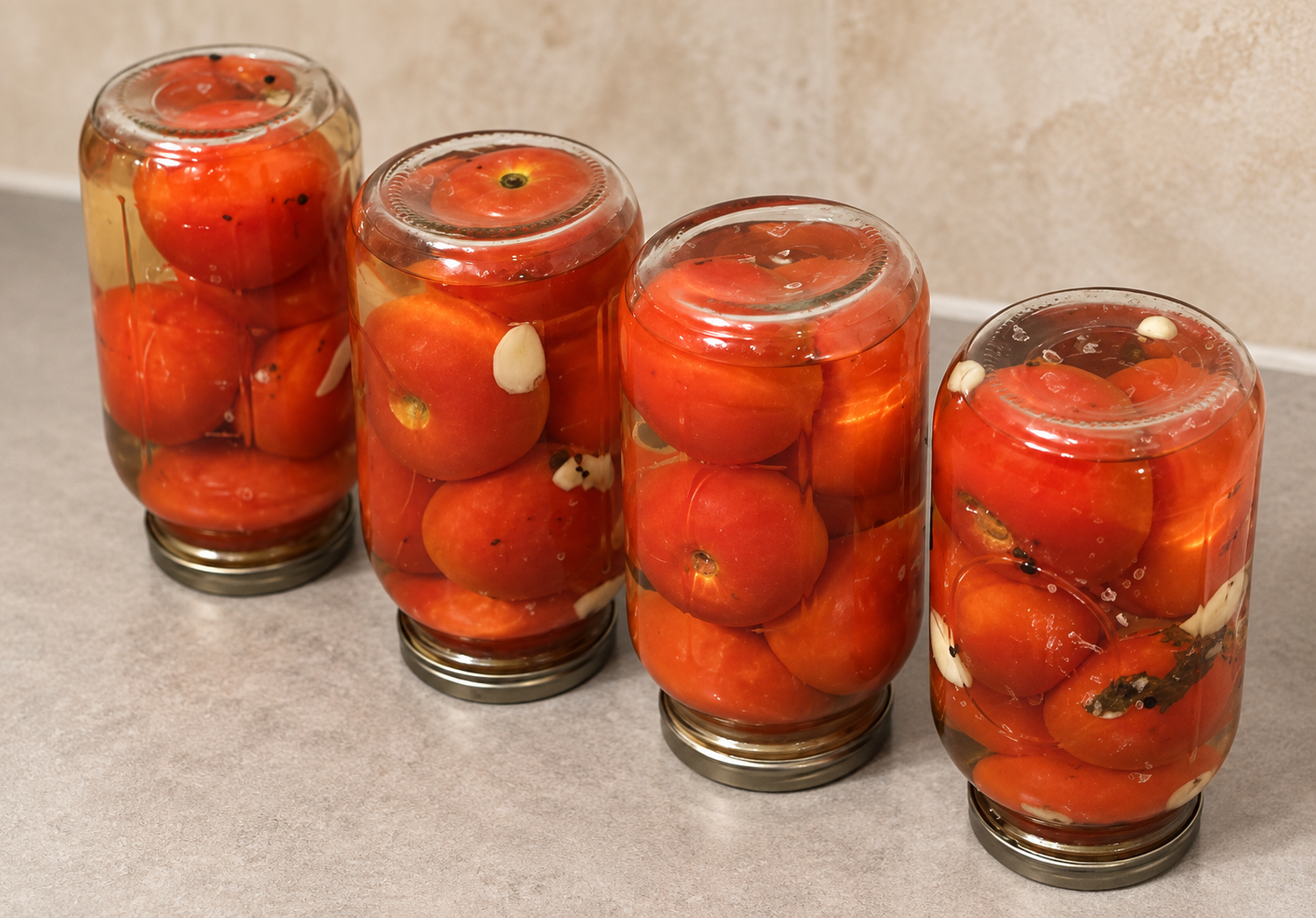
Batch Size
Two 2-quart jars. These jars fit together in the large heating pot. Approximately one full 1.7-liter kettle of boiling water is enough to fill the spaces around the tomatoes.
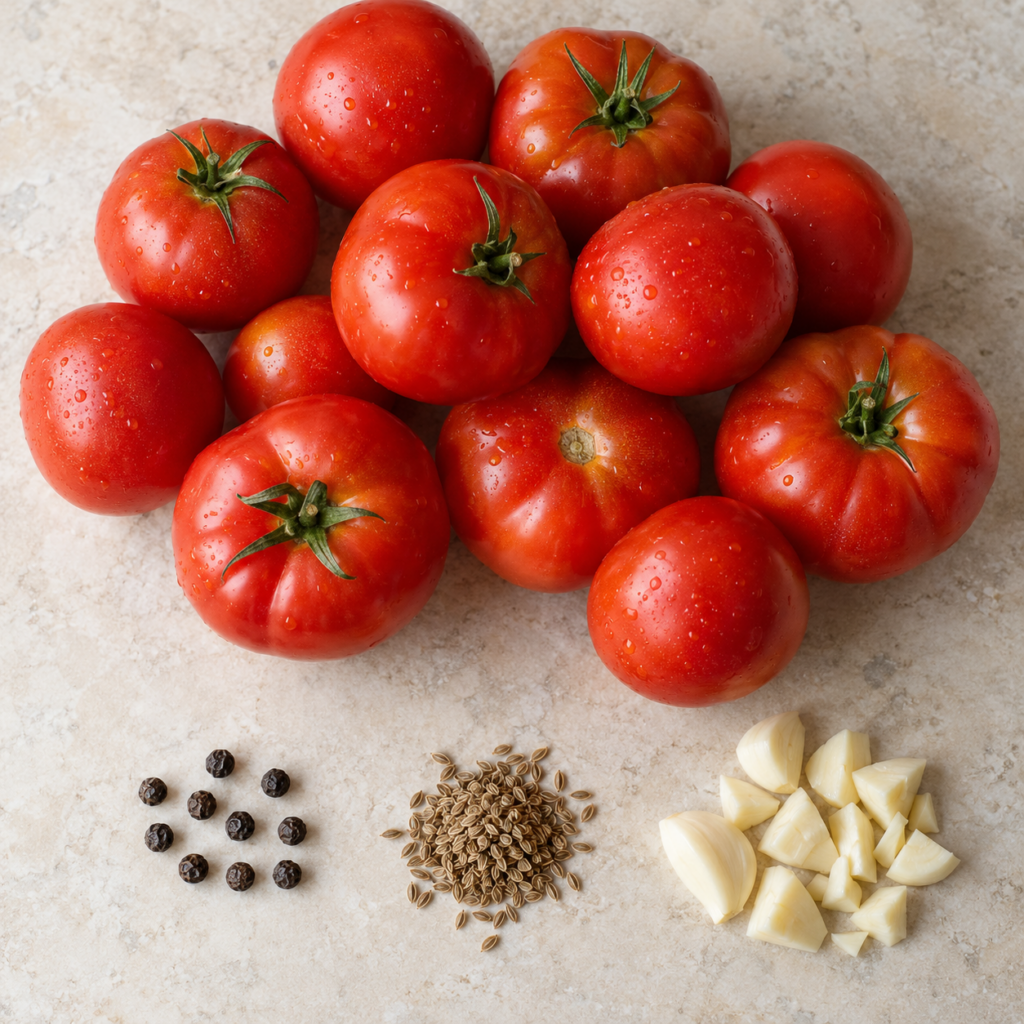
Ingredients
Per 2-Quart Jar
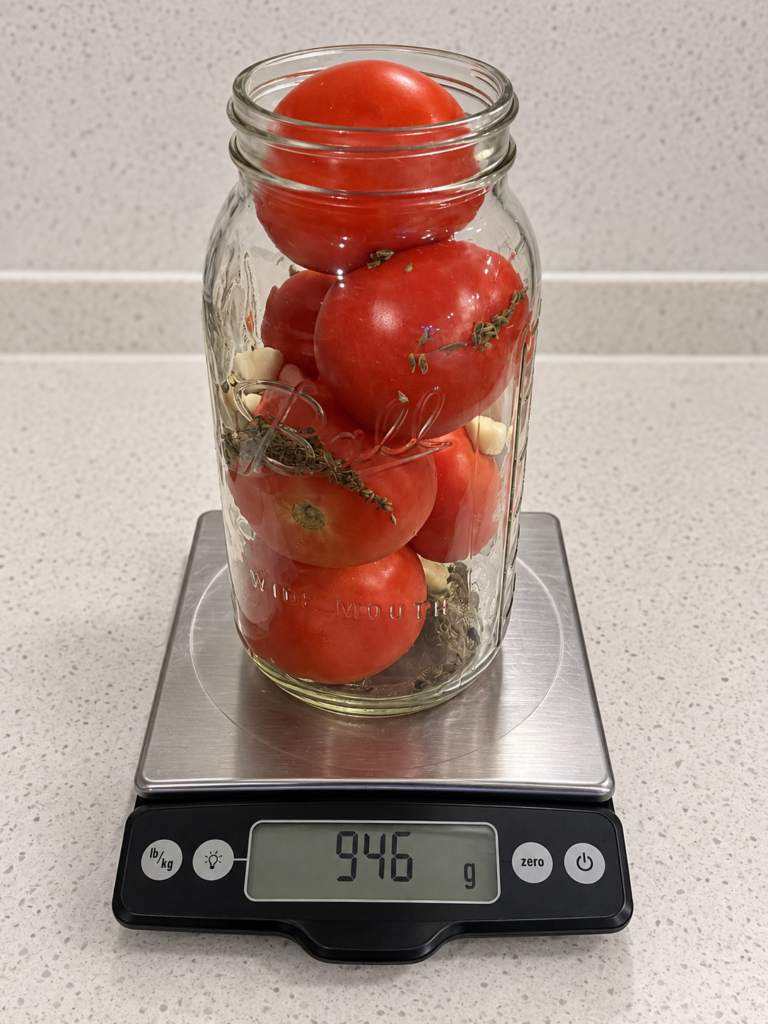
- About 950 g tomatoes
- 10 black peppercorns
- 1/2 teaspoon dill seeds
- 3 large garlic cloves, about 12 g, coarsely chopped
Brine for Two Jars
- Approximately 120 g pickling salt, about 4 heaping tablespoons
- 60 g 5% white vinegar, about 4 tablespoons
- Water drained from the two filled jars
Procedure
- Add water to a large, wide pot to approximately one-quarter of the jars’ height. Bring it to a simmer.
- Primary sterilization: Place two empty jars in the pot and heat them for 10 to 15 minutes. Heat the lids and screw bands in the same water.
- Wash the tomatoes and place them on a clean cloth to drain and dry slightly.
- Make sure there are no cuts, cracks, or rotten areas.
- Slightly soft areas are acceptable if the skin is intact and there are no signs of spoilage.
- After 15 minutes at a simmer, remove the hot jars and allow them to cool for about one minute. If preparing another batch, place the next two jars in the pot.
- Bring a full 1.7-liter kettle of water to a boil.
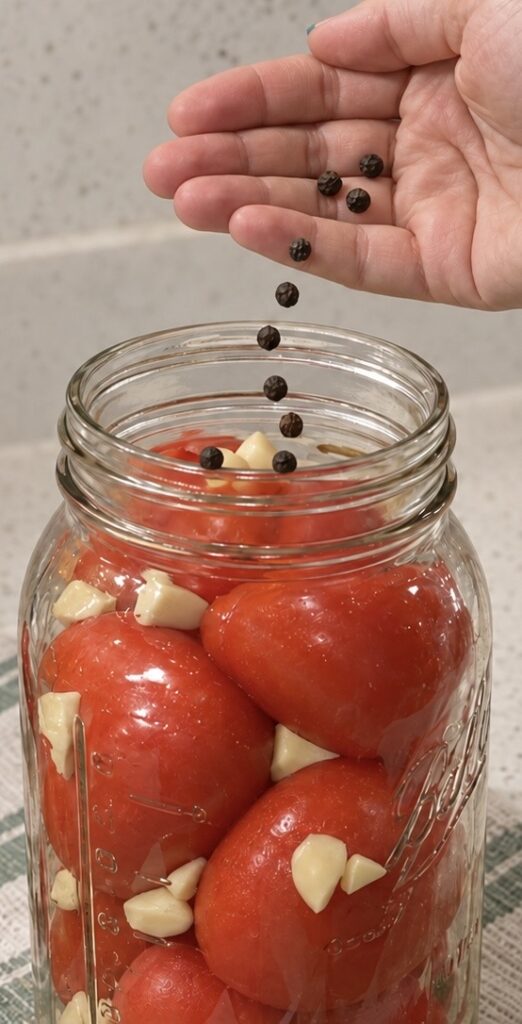
- Pack each warm jar in the following order:
- Tomatoes
- Coarsely chopped garlic
- Dill seeds
- Black peppercorns
- Secondary sterilization: Fill the packed jars with boiling water from the kettle and cover loosely with the lids. Keep cloth around as liquid drips a lot.
- Leave the 2-quart jars covered for 15 minutes. For 1-liter jars, use 10 minutes. This heats the tomatoes and jars throughout and reduces surface contamination.
- Drain the water from both jars into a 4-liter saucepan.
- Add 120 g pickling salt and bring the liquid to a boil.
- Only after the brine reaches a boil, add 60 g of 5% vinegar and immediately remove the saucepan from the heat. Acetic acid is volatile, so adding the vinegar last minimizes its loss.
- Tertiary sterilization: Pour the hot brine back into the jars, leaving approximately 5 mm of headspace. Seal the jars immediately.
- Turn the jars upside down and leave them on a protected surface until completely cool. This brings the hot brine into contact with the lid, reheats the lid, and makes leaks easy to detect.
- Check for leaks, label each jar with the preparation date, and leave the jars in a cool, dry place.
- Allow approximately one month for salt and acid to diffuse through the tomatoes. By then, the tomatoes should be evenly seasoned, tender, and ready to eat.
Technical Notes
Chemistry
“Sterilization” is used here in the traditional household sense. The three heating stages progressively reduce contamination and heat the jars, tomatoes, brine, and lids.
Using quantities based on total filled jar capacity makes different batches easier to reproduce. Tomatoes are mostly water, so salt and acid gradually diffuse between the surrounding brine and the liquid inside the tomatoes. The final concentration is therefore closer to the concentration calculated from the full jar volume than from the initially drained water alone.
The present salt level is approximately 3% based on total jar capacity. If too salty the next batch can test 2%, which would require 80 g of salt for two jars.
Storage Note
Check the jars after approximately one week. If the brine becomes cloudy or a lid bulges outward, contamination or active fermentation may have occurred. Discard the jar.
If the brine remains clean and transparent and the lid stays pulled inward, the jar has remained sealed without visible fermentation. Jars prepared by this household method have reportedly remained usable for many years.