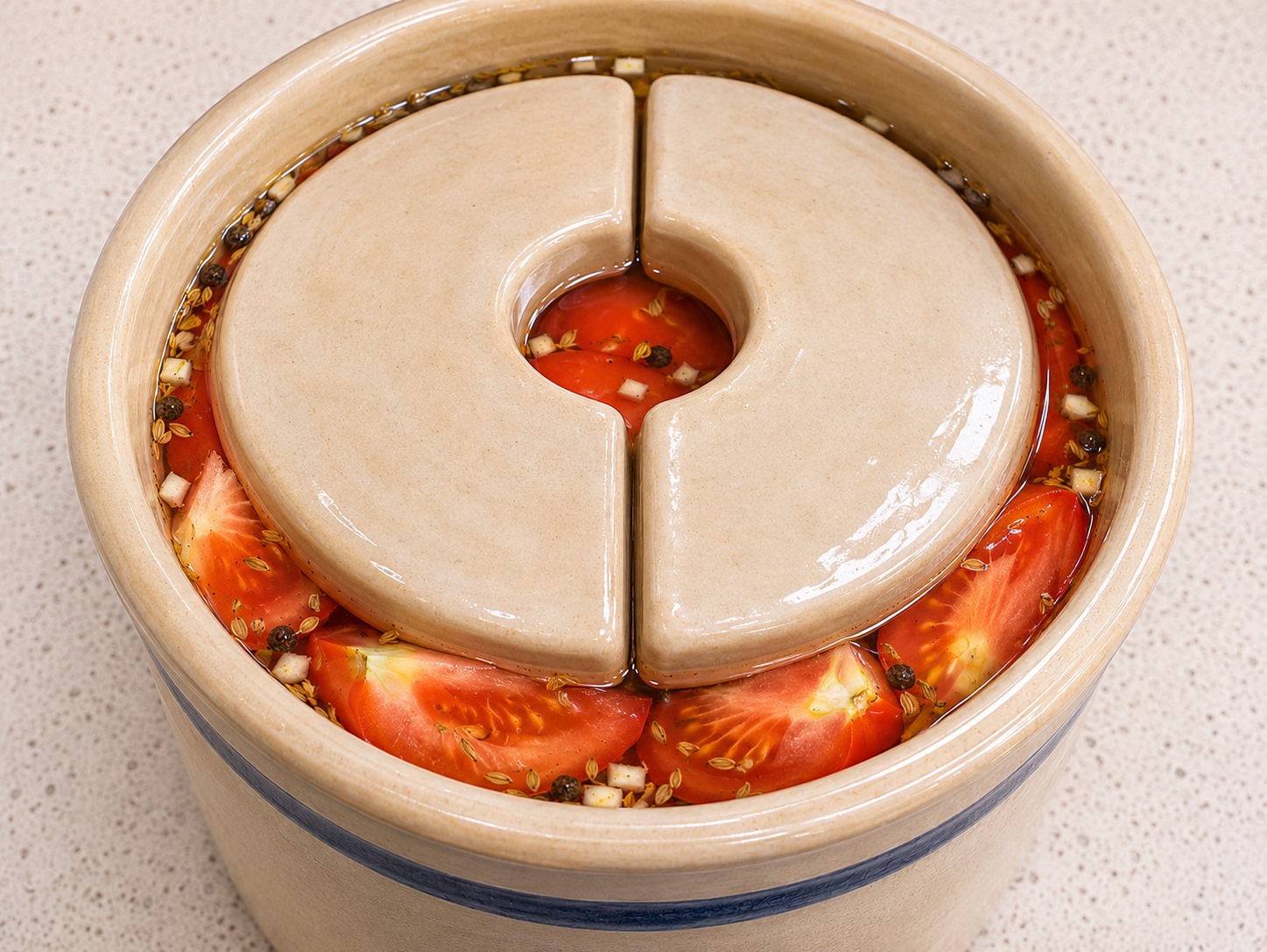
Experimental recipe — fermentation in progress.
I got a batch of nice organic tomatoes, but they were too large to fit conveniently into jars. So I decided to try something new, based on my sauerkraut recipe, using large tomato wedges and a salt ratio of 2.5%.
Ingredients
| Ingredient | Quantity |
| Large tomatoes | 1,100 g (2 tomatoes) |
| Water | 700 g |
| Salt | 45 g |
| Garlic, unpeeled | 30 g |
| Black peppercorns | Approximately 20 |
| Dill seeds | 1 tsp |
Salt ratio: 2.5% of the combined weight of tomatoes and water.
Preparation
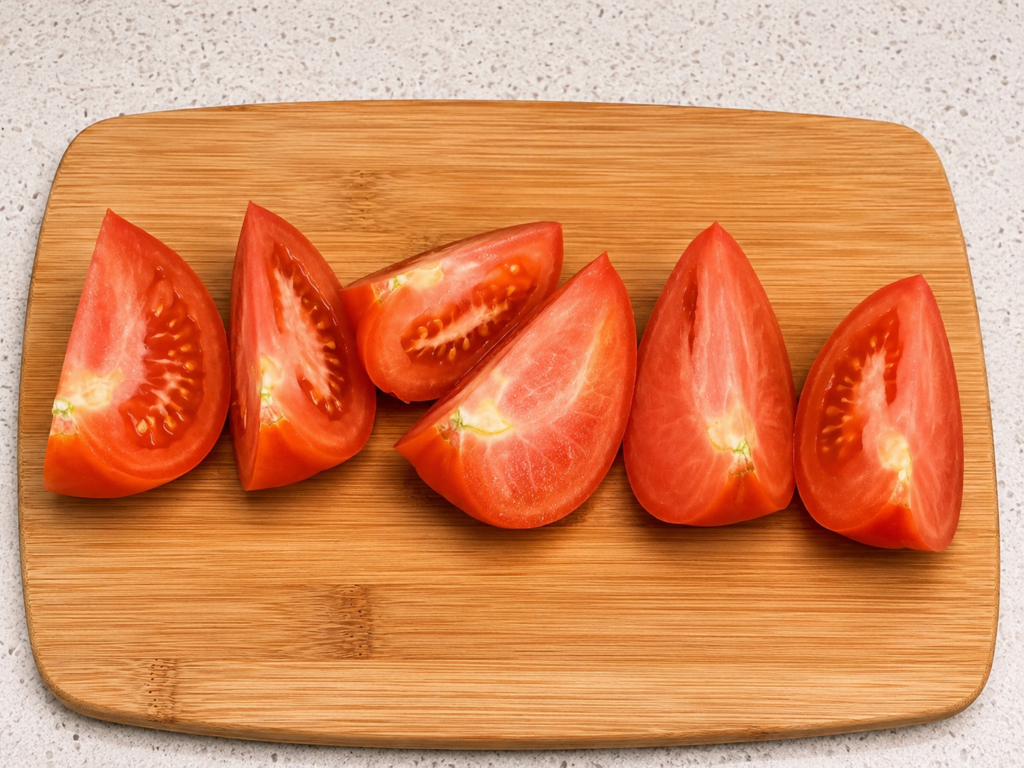
- Cut each tomato into six large wedges, approximately 80–100 g each. Leave the skin intact.
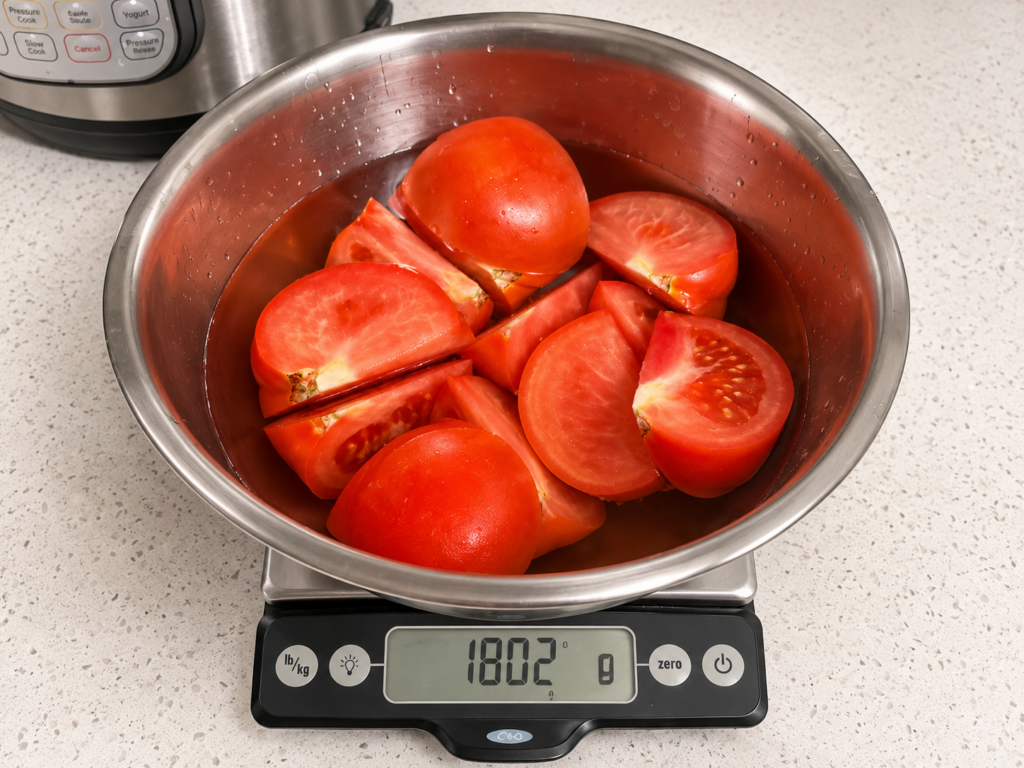
- Place the tomatoes in a large bowl and add enough water to cover them. This provides a practical estimate of the required amount of water. In this batch, 1,100 g of tomatoes required approximately 700 g of water.
- Calculate the required amount of salt and add it directly to the bowl, allowing it to dissolve.
- Put the garlic, black peppercorns, and dill seeds into a food chopper. Process into a coarse, chunky mixture.
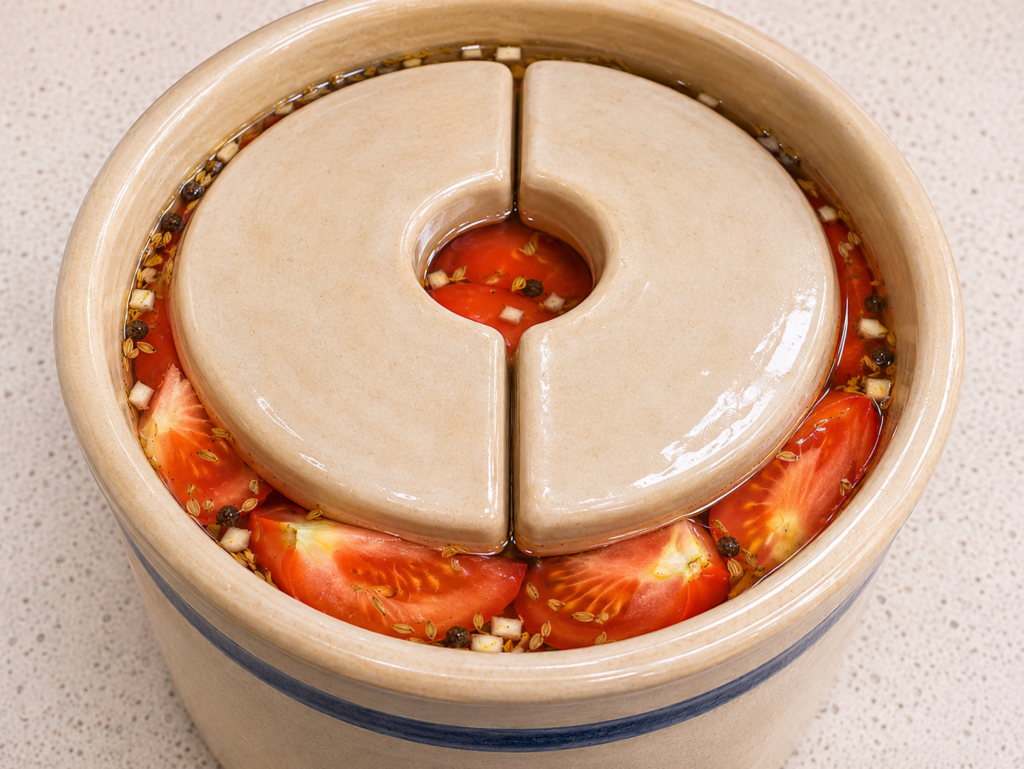
- Transfer the tomatoes into a fermentation crock, arranging them in a single layer without compressing them.
- Pour in the brine from the bowl and add the spice mixture.
- Install standard sauerkraut fermentation weights to keep the tomatoes completely submerged.
- Cover the crock with a lid that allows fermentation gases to escape. Leave at room temperature, preferably 18–22°C (64–72°F).
Fermentation
The expected fermentation time is 3–7 days, although the actual duration remains to be established.
Begin checking the acidity after 2–3 days. The target equilibrium pH is below 4.6, preferably 4.0–4.2. Once adequate acidification and the desired flavor are achieved, transfer to the refrigerator.
Physics and Chemistry
- Salt concentration: The 2.5% salt ratio favors lactic acid bacteria while inhibiting many undesirable microorganisms.
- Large wedges: A smaller surface-area-to-volume ratio reduces tissue damage and helps preserve the structure of the tomatoes.
- Temperature: Moderate fermentation temperatures may help limit excessive softening.
Storage
Keep refrigerated at or below 4°C (40°F), with the tomatoes submerged in brine. Discard the entire batch if mold develops.
Future Experiments
Food-grade calcium chloride (CaCl₂) at approximately 0.5–1 g per kilogram of tomatoes and water may help preserve firmness by strengthening the pectin structure.
The first batch contains no calcium chloride and will serve as a reference for future experiments.
Results
To be updated after fermentation:
- Actual fermentation time
- Acidity and flavor
- Firmness and texture
- Storage performance
- Potential improvements to the spice mixture
I preserved the quantities and procedure actually used today, excluding the previously suggested bay leaves and fresh dill. Fermentation time, final acidity, and storage performance remain unverified, so the recipe is explicitly marked as experimental.