Author: dragonflyriver

  • Slavic-Style Pickled Tomatoes

    Slavic-Style Pickled Tomatoes

    Batch Size

    Two 2-quart jars. These jars fit together in the large heating pot. Approximately one full 1.7-liter kettle of boiling water is enough to fill the spaces around the tomatoes.

    Ingredients

    Per 2-Quart Jar

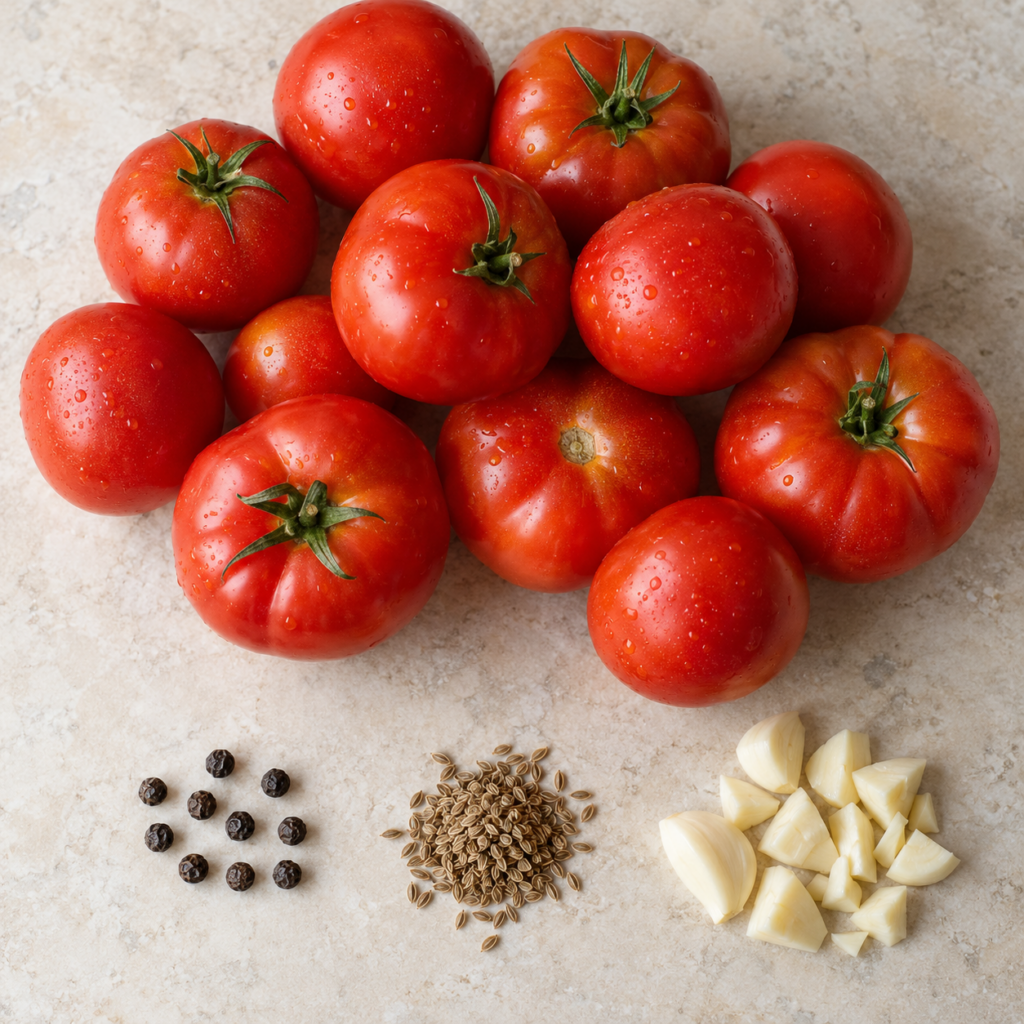
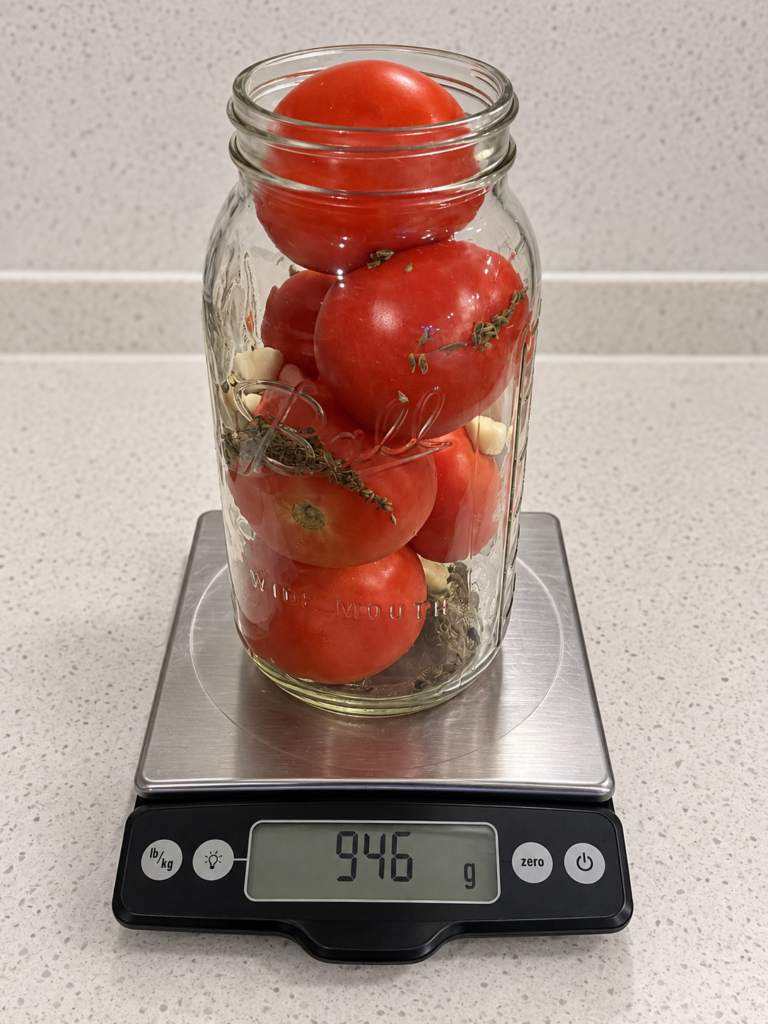
    • About 950 g tomatoes
    • 10 black peppercorns
    • 1/2 teaspoon dill seeds
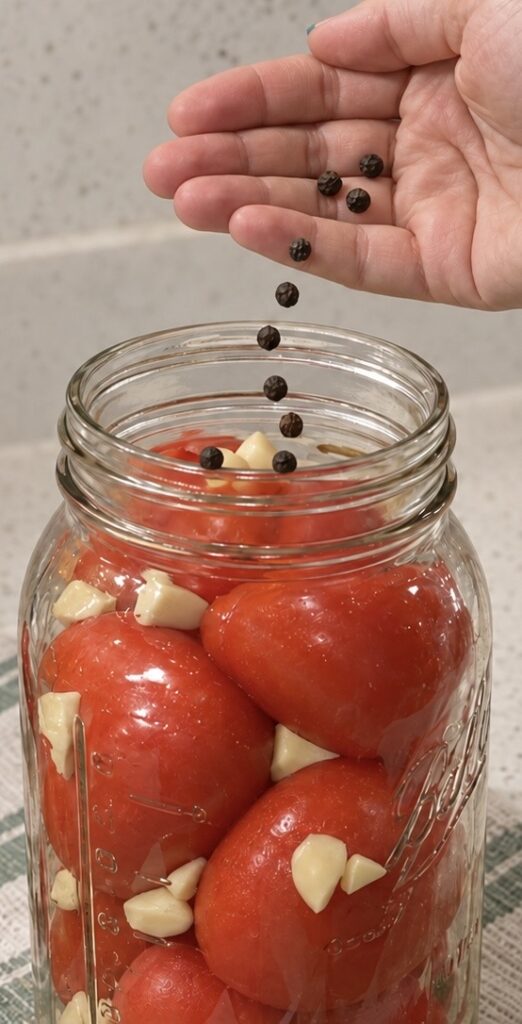
    • 3 large garlic cloves, about 12 g, coarsely chopped
    Brine for Two Jars

    • Approximately 120 g pickling salt, about 4 heaping tablespoons
    • 60 g 5% white vinegar, about 4 tablespoons
    • Water drained from the two filled jars

    Procedure

    1. Add water to a large, wide pot to approximately one-quarter of the jars’ height. Bring it to a simmer.
    2. Primary sterilization: Place two empty jars in the pot and heat them for 10 to 15 minutes. Heat the lids and screw bands in the same water.
    3. Wash the tomatoes and place them on a clean cloth to drain and dry slightly.
      • Make sure there are no cuts, cracks, or rotten areas.
      • Slightly soft areas are acceptable if the skin is intact and there are no signs of spoilage.
    4. After 15 minutes at a simmer, remove the hot jars and allow them to cool for about one minute. If preparing another batch, place the next two jars in the pot.
    5. Bring a full 1.7-liter kettle of water to a boil.
    6. Pack each warm jar in the following order:
      • Tomatoes
      • Coarsely chopped garlic
      • Dill seeds
      • Black peppercorns
    7. Secondary sterilization: Fill the packed jars with boiling water from the kettle and cover loosely with the lids. Keep cloth around as liquid drips a lot.
    8. Leave the 2-quart jars covered for 15 minutes. For 1-liter jars, use 10 minutes. This heats the tomatoes and jars throughout and reduces surface contamination.
    9. Drain the water from both jars into a 4-liter saucepan.
    10. Add 120 g pickling salt and bring the liquid to a boil.
    11. Only after the brine reaches a boil, add 60 g of 5% vinegar and immediately remove the saucepan from the heat. Acetic acid is volatile, so adding the vinegar last minimizes its loss.
    12. Tertiary sterilization: Pour the hot brine back into the jars, leaving approximately 5 mm of headspace. Seal the jars immediately.
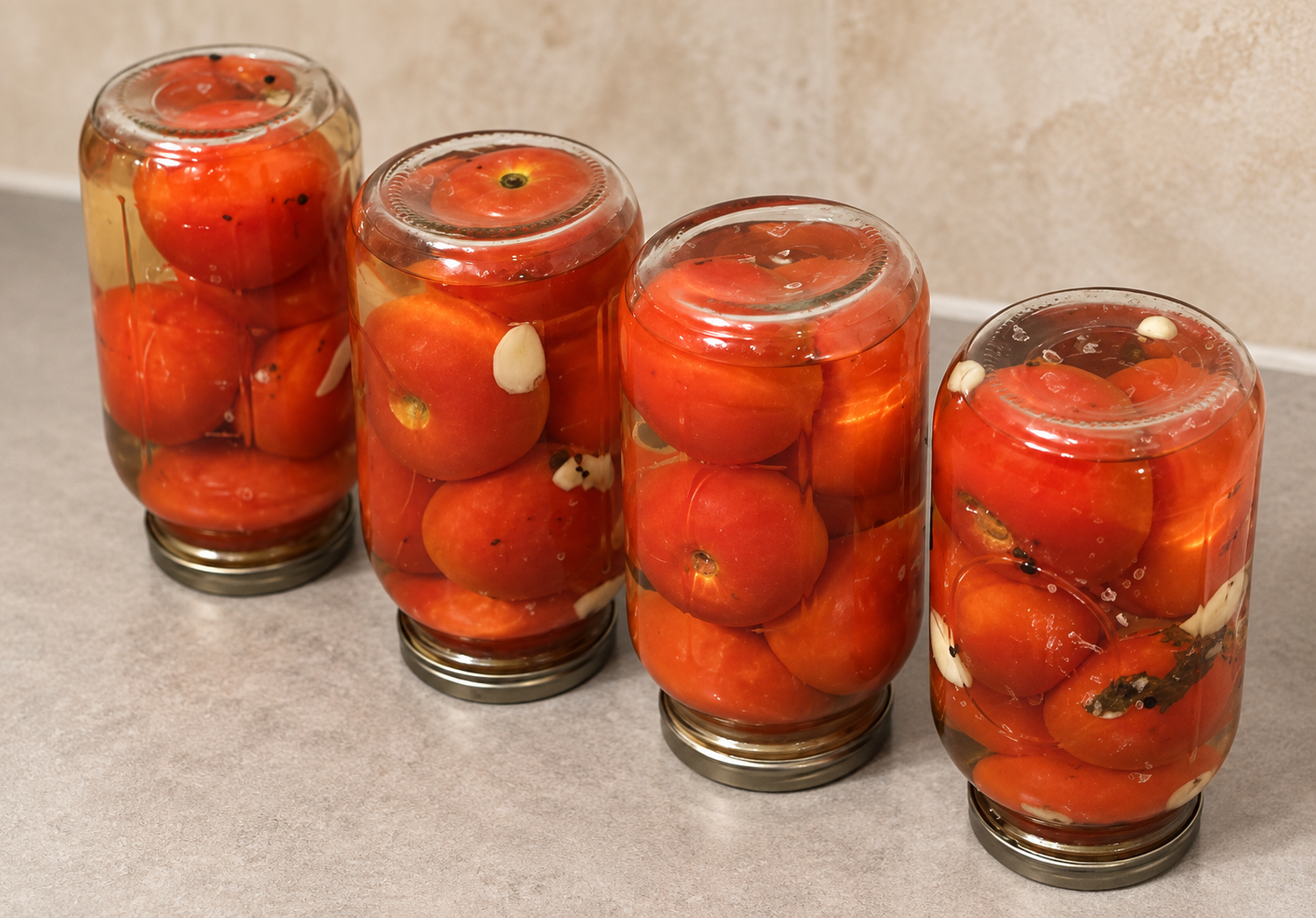
    13. Turn the jars upside down and leave them on a protected surface until completely cool. This brings the hot brine into contact with the lid, reheats the lid, and makes leaks easy to detect.
    14. Check for leaks, label each jar with the preparation date, and leave the jars in a cool, dry place.
    15. Allow approximately one month for salt and acid to diffuse through the tomatoes. By then, the tomatoes should be evenly seasoned, tender, and ready to eat.
    Technical Notes

    Chemistry

    “Sterilization” is used here in the traditional household sense. The three heating stages progressively reduce contamination and heat the jars, tomatoes, brine, and lids.

    Using quantities based on total filled jar capacity makes different batches easier to reproduce. Tomatoes are mostly water, so salt and acid gradually diffuse between the surrounding brine and the liquid inside the tomatoes. The final concentration is therefore closer to the concentration calculated from the full jar volume than from the initially drained water alone.

    The present salt level is approximately 3% based on total jar capacity. If too salty the next batch can test 2%, which would require 80 g of salt for two jars.

    Storage Note

    Check the jars after approximately one week. If the brine becomes cloudy or a lid bulges outward, contamination or active fermentation may have occurred. Discard the jar.

    If the brine remains clean and transparent and the lid stays pulled inward, the jar has remained sealed without visible fermentation. Jars prepared by this household method have reportedly remained usable for many years.
  • A Good Excuse to Drive to the Mountains

    A Good Excuse to Drive to the Mountains

    This Labor Day weekend, we will be showing recent collection of Leta’s paintings at the booth #70 @ Kings Mountain Art Fair. But you do not have to be seriously interested in buying art to enjoy the trip. It is simply a good excuse to escape into the Santa Cruz Mountains and spend a full day among the redwoods.

    There will be burgers, beer, ice cream and live music. Children can disappear into games and crafts at Kiddie Hollow, while adults explore more than 125 artists showing paintings, jewelry, furniture and many other things that are difficult to classify.

    Parking along Skyline Boulevard can fill quickly during peak hours. If your car ends up some distance away, the fair provides a free, almost luxurious shuttle bus to bring you back through the forest.

    After the fair, you can continue along Skyline, take a short hike and find a view of the ocean. Or, on Saturday or Sunday, finish the day at The Mountain House, an upscale restaurant almost next door. Reservations are strongly recommended.

    The forecast is sunny and pleasantly cool, roughly in the low 70s. After the recent California heat, that alone may justify the drive.

    Kings Mountain Art Fair, Woodside, CA

    See you at Kings Mountain Art Fair
    Booth #70, Leta Eydelberg
    September 5-7, 2026
    10:00 a.m. to 5:00 p.m.
    13889 Skyline Boulevard, Woodside, CA
    Free admission and parking

  • A Weekend Escape: Spend a Day at the Palo Alto Festival of the Arts

    A Weekend Escape: Spend a Day at the Palo Alto Festival of the Arts

    If you’re looking for a simple weekend outing in the Bay Area, the Palo Alto Festival of the Arts is worth adding to your list.

    The festival transforms several blocks of downtown Palo Alto into an open-air gallery filled with artists, craftspeople, food vendors, musicians, and thousands of visitors enjoying a relaxed summer atmosphere.

    One of the nicest aspects of the event is its variety. Fine art paintings are displayed alongside photography, handmade leather goods, jewelry, ceramics, decorative pieces, and many other handcrafted items. Even visitors who don’t usually think of themselves as art collectors often discover something unexpected.

    The festival is also an excellent place to look for gifts. Handmade items have a different character than mass-produced products, and many pieces are practical enough to become part of everyday life at home.

    And, of course, there is food. Street vendors, cafés, restaurants, snacks, desserts, and a cold beer on a warm California afternoon turn the visit into much more than an art event.

    Even if you don’t plan to buy anything, simply walking through the exhibits and talking with artists can be rewarding. There is something refreshing about spending a few hours away from screens, surrounded by creativity, music, conversation, and people who still make things with their own hands.

    If the weather cooperates, the festival makes for an easy and enjoyable day trip.

  • Semi-permanent phone in Europe: Vodafone eSIM Is Convenient and There Is No Reason Not to Use It

    Semi-permanent phone in Europe: Vodafone eSIM Is Convenient and There Is No Reason Not to Use It

    Vodafone is a good European carrier. It makes it easy to obtain a local phone number and provides plenty of data, calling, and roaming options immediately upon arrival.

    What You Can Get

    • A potentially permanent local European phone number. A simple solution for locals as well as travelers who visit Europe several times a year.
    • Do not neet to pay constantly: 
      • Let the plan expire after the first month if you do not need it again immediately.
      • Reactivate it when you return to Europe.
    • An easy way to keep the same number
      • Recharge the account once every six months to keep the number active indefinitely.
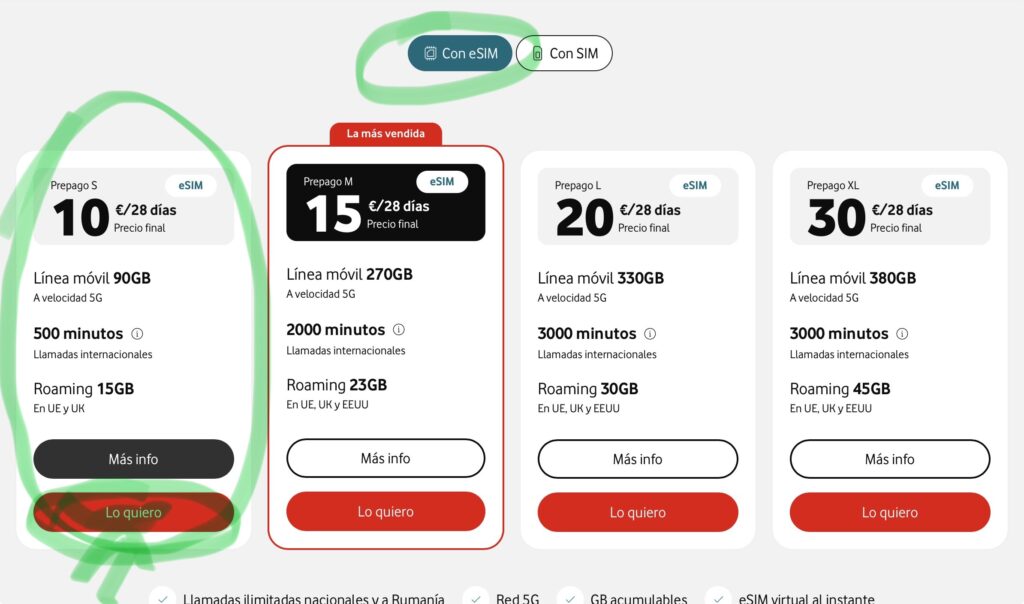
    • Cheapest Tarifa S (€10 every 28 days) includes:
      • 90 GB of mobile data.
      • 500 minutes of international calls.
      • 15 GB of roaming data within the EU and the UK.

    Select and purchase sequence

    Vodafone prepaid plans:

    • Select Prepago (prepaid).
    • Select eSIM and verify that your phone supports eSIM.
    • Choose Tarifa S (€10) every 28 days: 90Gb data and 500 minutes. In my experience, it is more than enough.
    • Complete the purchase online.

    Activation sequence

    Screenshot
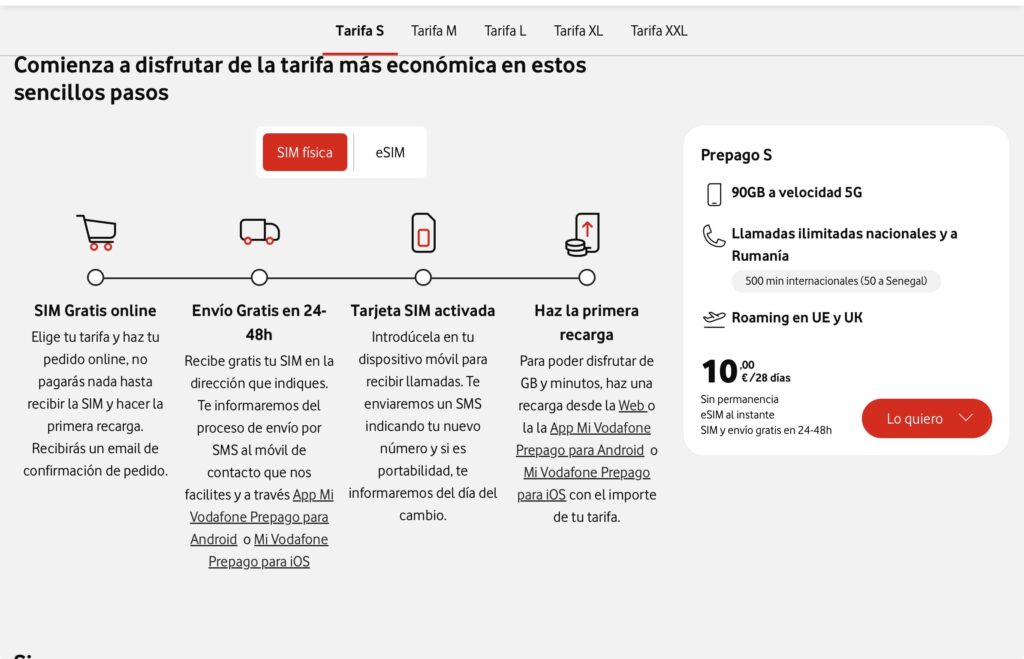
    • Select the Tarifa S prepaid plan and choose the eSIM option.
    • Complete the online order. The eSIM is available immediately, so there is no need to wait for delivery.
    • Activate the eSIM on your phone and follow the setup instructions.
    • Vodafone will send your new phone number by SMS.
    • Make the first recharge (top-up) through the Vodafone website or the Mi Vodafone app.
    • Start using the service with the data, calling, and roaming benefits included in your plan.