
This method produces crisp, naturally fermented cabbage. The cabbage is packed in two stages because freshly cut cabbage initially occupies much more space than it does after releasing its juice.
Ingredients per 1 kg of cabbage
- 1 kg white cabbage
- 20 g salt, exactly 2% of the cabbage weight
(approximately 1 heaping tablespoon, but weighing is preferable) - 1 small carrot, approximately 60–80 g
Practical 5 kg batch
- 5 kg white cabbage
- 100 g salt
- Approximately 300–400 g carrots, or 2–3 large carrots
Begin with 3–4 kg of cabbage. Reserve the remainder for topping up the crock after the first batch compresses.
Equipment
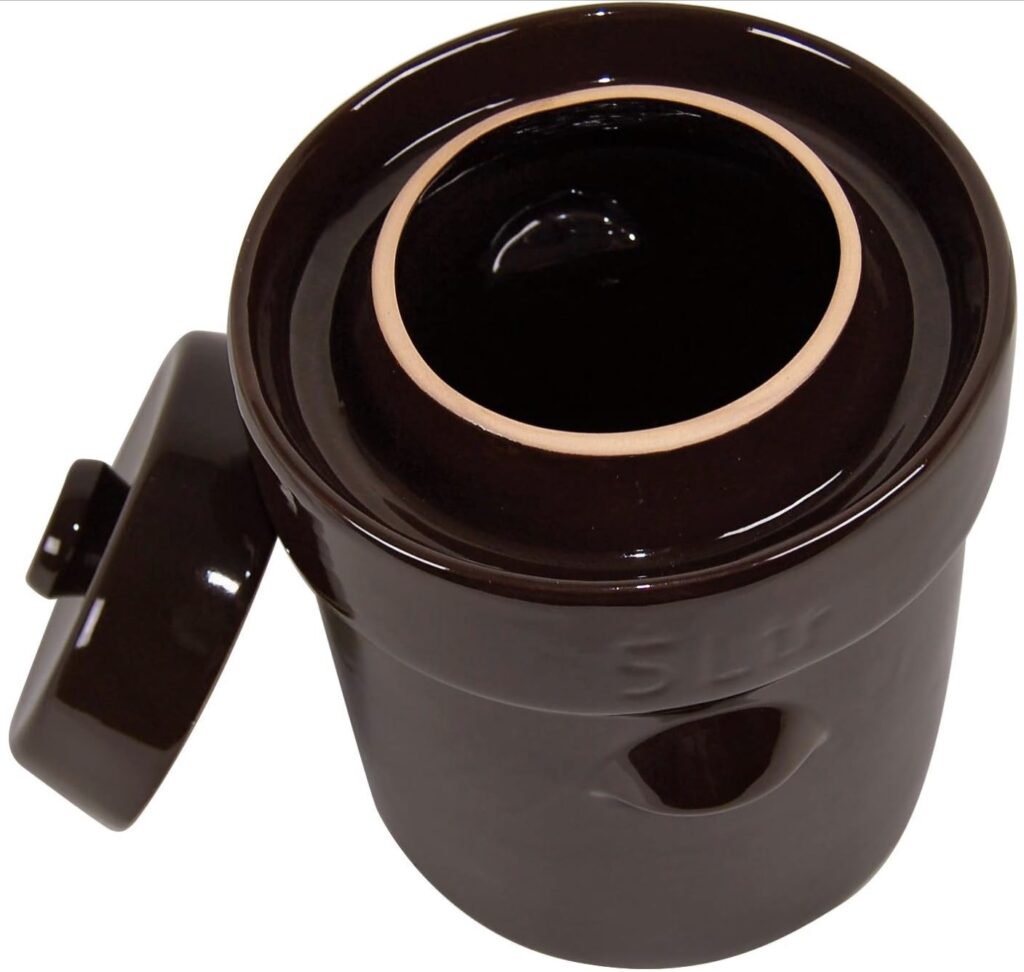
A tall, relatively narrow fermentation crock is preferable to a wide vessel because it is easier to keep the cabbage submerged.
- 5-liter fermentation crock with weights and an airlock
- Large mixing bowl for intermediary overturn
- Half-gallon or smaller jars for refrigerated storage
Preparation
Stage 1: Start the brine
- Finely slice approximately 2 kg of cabbage into strips 2–3 mm wide. Place it at the bottom of the crock. The fine cut releases juice more readily.
- Cut another 1–2 kg of cabbage as you prefer. I like fairly large pieces rather than conventional finely shredded sauerkraut.
- Pack the cabbage into the crock in layers, distributing the salt evenly as you go.
- If you already know that the final batch will contain exactly 5 kg of cabbage, you may add all 100 g of salt now. The higher initial salt concentration accelerates juice extraction, and the concentration will become correct after the reserved cabbage is added.
- The fermentation weights may not fit yet because the freshly cut cabbage is still bulky. Close the crock with its lid or airlock to minimize exposure to air.
- Leave it at room temperature for approximately one day, until the cabbage releases a substantial amount of juice and decreases in volume.
Stage 2: Fill the crock
- Empty the crock into a large bowl. Wetter cabbage will be in the bottom and drier cabbage at the top.
- Cut enough reserved cabbage to bring the total batch weight to 5 kg ( or whatever we dicied it to be to make the salt at 2% eventually. Place fresher drier cabbage at the bottom of the crock.
- Slice the carrots into rounds approximately 3 mm thick and distribute them evenly through the cabbage.
In this method, the carrots are added only after the salty brine has begun forming. This allows the naturally sweet carrot to become surrounded by brine quickly, reducing the opportunity for unwanted surface growth. - Return the previously salted cabbage to the crock, placing the juicier cabbage toward the top.
- Press everything down firmly. The full 5 kg batch should now fit.
- Place the fermentation weights on top. The cabbage will not be covered by the brine yet, but thep rocess wil go faster from now on.
- Close the lid of the crock and add water to the airlock.
- Ferment at room temperature for another one to two days before beginning to check the flavor.
Checking readiness
At first, the cabbage may taste slightly bitter or harsh. Active bubbling indicates that fermentation has begun.
The brine should rise above the cabbage and fermentation weights. This keeps the cabbage in a low-oxygen environment and helps it ferment evenly.
After another couple of days, bubbling usually becomes steadier and the flavor begins to develop. If you like you cna Taste the cabbage daily. It will gradually become more acidic.
There is no single mandatory stopping point: transfer it to the refrigerator when the flavor is pleasantly fermented but not yet more sour than you prefer.
Optional spice twist:
When transferring to the refrigerator, add about 1 tsp of dry mustard to each liter of the cabbage- it makes it very interesting and delicious. Try one jar with mustard and another without. To feel the difference.
Refrigerated storage
Pack the cabbage firmly into clean half-gallon or smaller jars.
- Keep the cabbage covered with its brine.
- Fill the jars almost, but not completely, to the top.
- Leave some space because fermentation and gas production will continue.
- Refrigeration slows fermentation but does not stop it completely.
- For the freshest flavor and texture, eat it within several weeks.
- Minimize air exposure to discourage oxidation, surface yeast, and mold.
Why it works
Salt draws water from cabbage cells by osmosis, creating a natural brine. A salt concentration of approximately 2% suppresses many undesirable microorganisms while favoring salt-tolerant lactic-acid bacteria.
These bacteria convert naturally occurring sugars into lactic acid. The falling pH preserves the cabbage and produces its characteristic sour flavor. Refrigeration slows bacterial activity, preventing the cabbage from becoming excessively sour too quickly.