
A dense, moist rye loaf that requires no kneading. Water can be replaced with whey left from making tvorog. Using whey adds acidity, minerals, and a subtle fermented flavor while making productive use of a cooking byproduct.
Ingredients
- 600 g rye flour
- 550 g water or whey
- 18 g salt
- ½ teaspoon dry yeast, optional
- Optional flavoring ( one of):
- 3 tablespoons caraway seeds OR
- 3 tablespoons thyme leaves OR
- 3 tablespoons sesame seeds
Preparation
- Mix the dough.
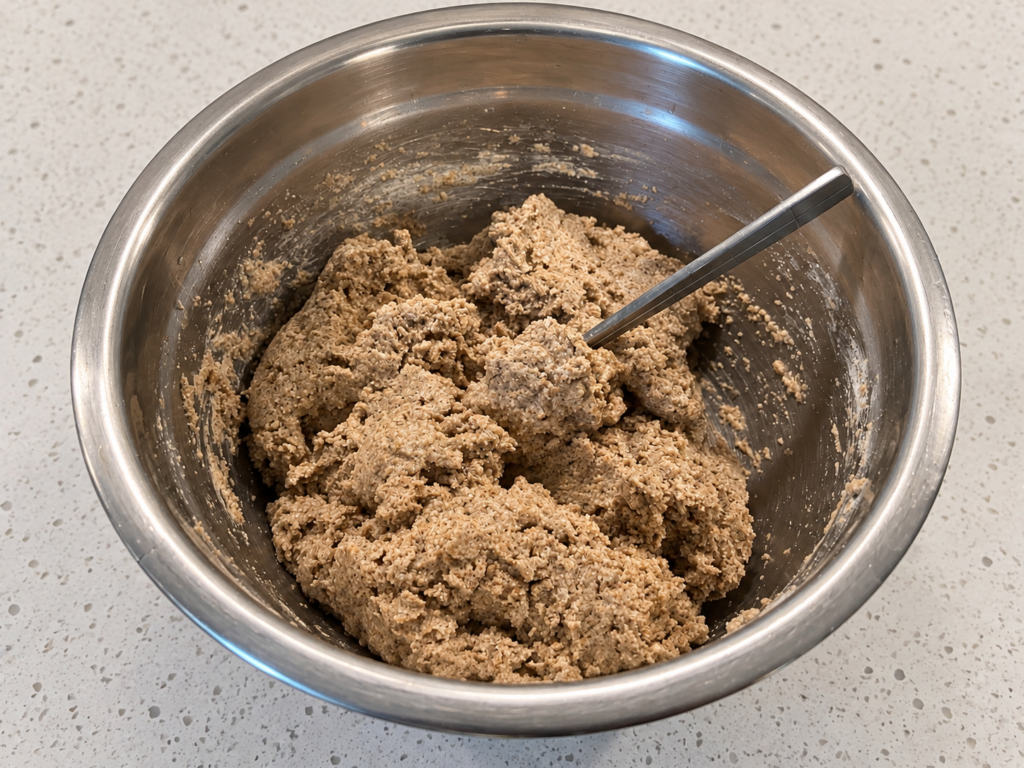
Combine the rye flour, water or whey, salt, and yeast. Mix until no dry flour remains. Rye dough will resemble a thick paste rather than elastic wheat dough.
The yeast may be omitted, but spontaneous fermentation can take up to 48 hours. Its speed depends primarily on temperature and the microorganisms naturally present in the flour and surrounding environment. - Ferment for at least 12 hours.
Cover the bowl with foil or a lid and leave it at room temperature for about 12 hours. The dough should become visibly aerated, slightly expanded, and noticeably more aromatic. - Add the flavoring.
When the dough looks ready, mix in the caraway, thyme, or sesame seeds. Three tablespoons produce a distinct flavor without overwhelming the rye. - Transfer the dough to the form and proof.
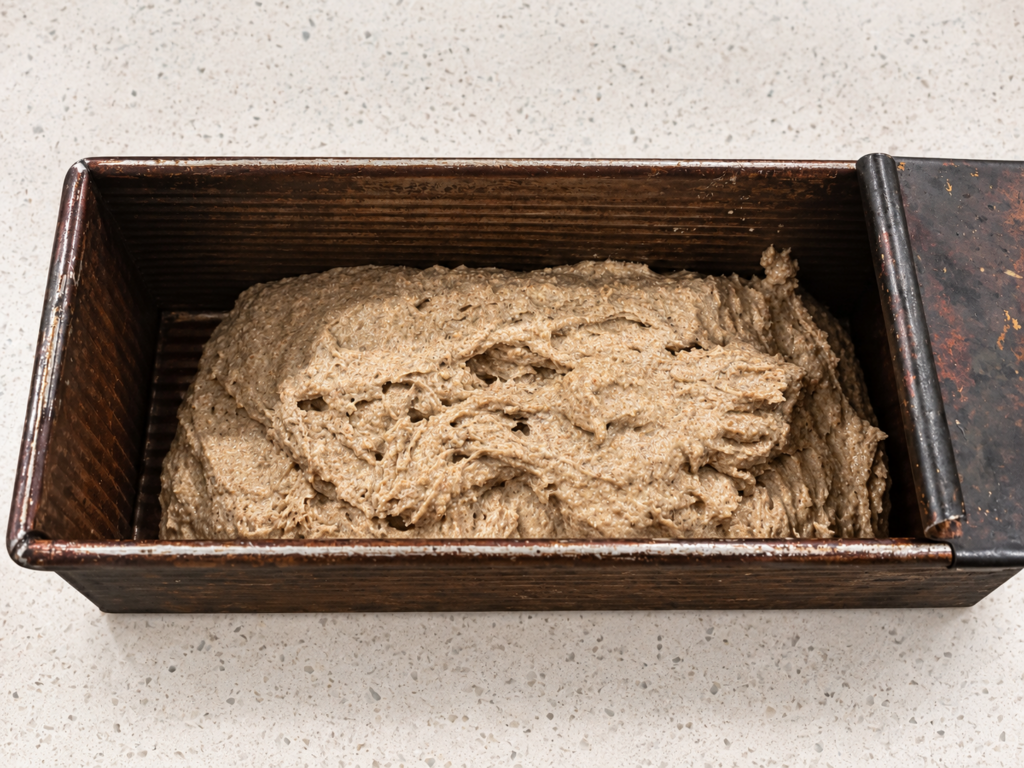
Transfer the dough to a greased baking form with an oven-safe lid. Smooth the surface with a wet spoon or spatula. Cover and leave for at least 2 hours to rise again. It may also be left overnight if convenient.
For a morning bake, place the covered form in the oven before going to bed and use the oven’s automatic start function, if available. - Bake covered.
Bake with the lid closed at 400°F (205°C) for 50 minutes.
For a cold-oven start, place the covered form in the oven and set it to run for 1 hour at 400°F. If the oven takes approximately 15 minutes to heat, the bread will receive about 45 minutes at full temperature. - Finish uncovered.
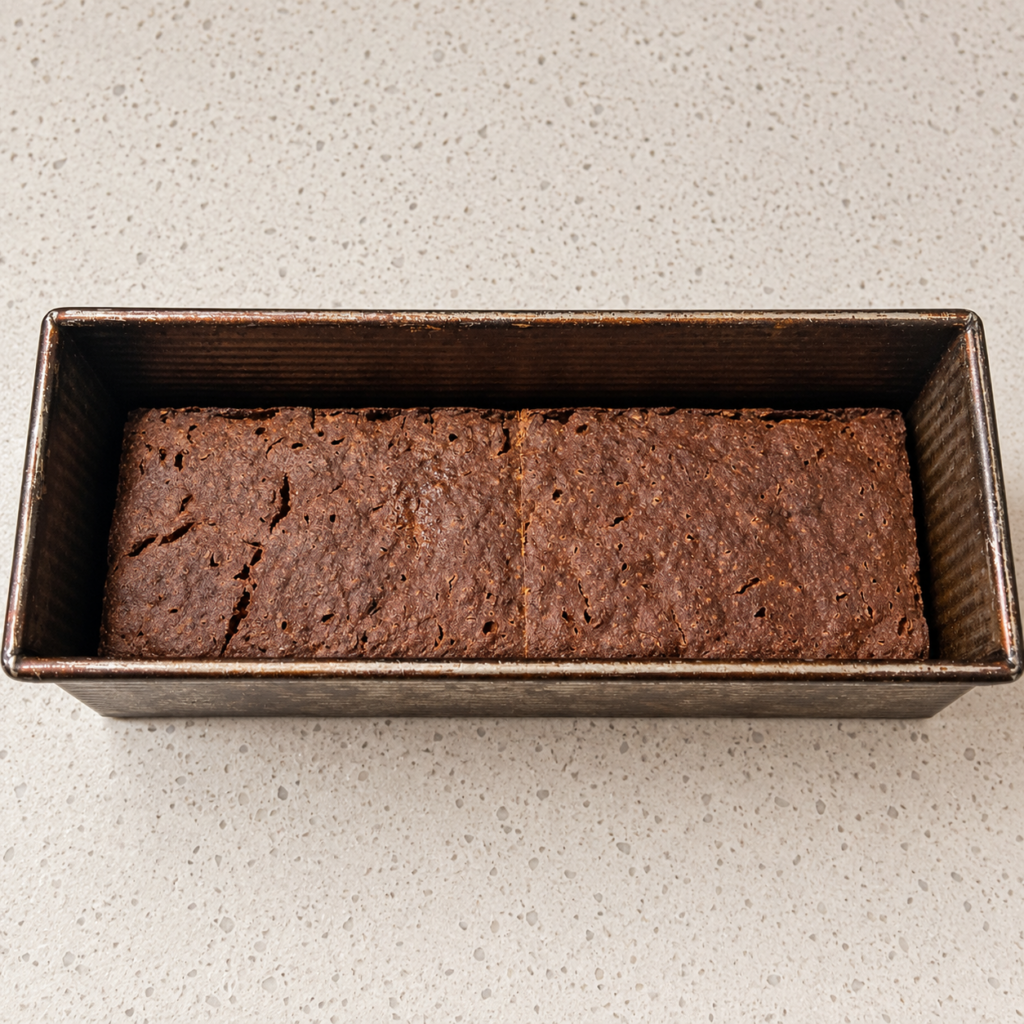
When the covered baking cycle is complete, the bread should be baked through but may not yet have a firm, attractive crust. Remove the lid, reduce the temperature to 350°F (175°C), and bake for another 30 minutes.
Alternatively, use a thermometer and stop baking when the internal temperature reaches approximately 190°F (88°C). - Cool.
Let the loaf rest in the form for 10 minutes, then remove it and cool completely on a wire rack before cutting. Ideally, wait several hours or until the following day. Rye starches continue setting as the loaf cools, producing cleaner slices and a less sticky crumb.





Why This Works
Rye contains little gluten capable of forming an elastic structure, so kneading provides almost no benefit. The high hydration allows rye pentosans and starches to bind water, while the long fermentation develops acidity and flavor. Baking under a lid limits early moisture loss; the uncovered final stage firms and dries the crust.
Storage
Keep the fully cooled loaf wrapped or in a bread box for 3–4 days. Rye bread usually tastes better on the second day. For longer storage, slice and freeze it so individual pieces can be toasted directly from frozen.
Scientific Note
Rye flour contains much less gluten-forming protein than typical white bread flour—approximately 2.8% compared with 9–14%, depending on the flour and how the protein is measured. This is why pure rye bread is difficult to produce commercially because rye flour behaves very differently from wheat flour. Many store-bought rye breads are therefore colored versions, blended with wheat flour or other grains to improve their structure and handling.